
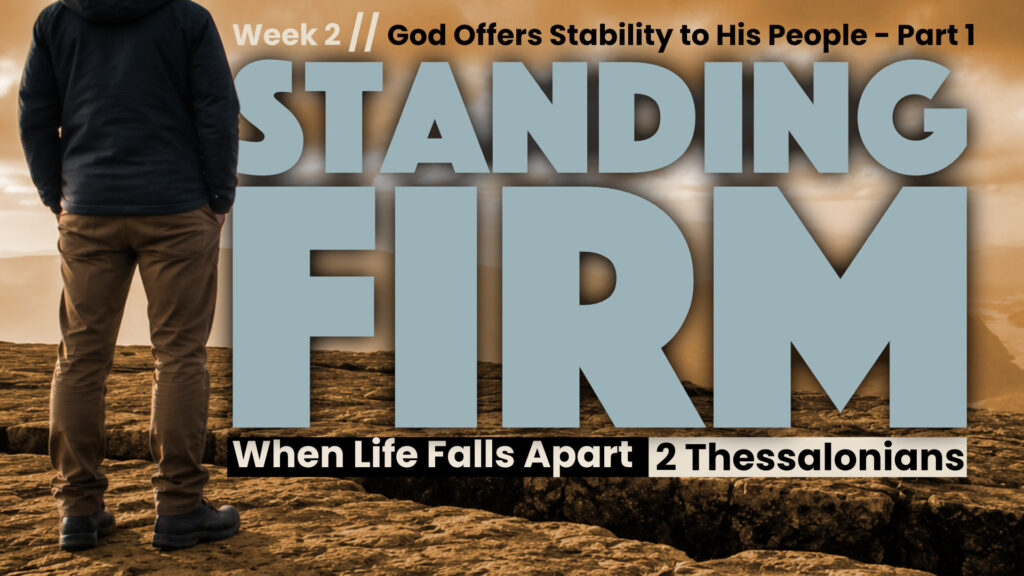
This five-day devotional invites you to move from anxiety and speculation into steady confidence in Jesus Christ. Each day builds a little more spiritual stability by grounding your heart in Scripture, strengthening discernment, and renewing hope that Jesus wins—no matter what the world looks like.
Day 1
2 Thessalonians 2:1-2
Fear often rises when we feel like we’re missing something—especially when the topic is as weighty as the return of Christ. In Thessalonica, false messages and spiritual noise left believers unsettled and alarmed, and Paul’s first move was not to feed their curiosity but to steady their footing. The sermon reminded us that this same dynamic happens today: sensational claims can create confusion, and confusion can quietly reshape how we live.
Stability begins by recognizing the difference between being informed and being disturbed. Paul does not shame the church for feeling shaken; he shepherds them back to calm, Christ-centered clarity. The goal isn’t to pretend the future is simple—it’s to refuse panic, to resist spiritual manipulation, and to let Jesus set the pace of your mind and heart.
- What kinds of headlines, conversations, podcasts, or social media posts most easily leave you feeling unsettled or alarmed?
- When you feel spiritual anxiety, what is your usual reflex—research, scrolling, debating, withdrawing, or praying?
- Write down one fear you carry about the future and bring it honestly to God in prayer today.
- What would it look like for you to pursue peace without pursuing denial—calmness that still faces reality?
- Choose one simple practice for the next 24 hours that reduces noise (limit media, read Scripture first, or take a quiet walk) and note what changes in your spirit.
Day 2
2 Thessalonians 2:3-4
Paul gives the Thessalonians an anchor: don’t let anyone deceive you. Instead of chasing rumors, he points them to God’s bigger timeline and warns about the pattern of lawlessness—evil that exalts itself, pushes God aside, and demands ultimate allegiance. The sermon emphasized that while the specifics of prophecy can be difficult, the overall direction is clear: evil is real, deceptive, and self-glorifying.
This helps believers resist both extremes: obsession and avoidance. Obsession tries to decode every event; avoidance pretends darkness doesn’t exist. Paul calls the church to something sturdier—discernment rooted in truth. A mature faith can say, “I don’t know every detail,” while still recognizing the spiritual shape of rebellion: pride that replaces worship with self, and power that seeks devotion that belongs only to God.
- Where do you see the temptation—personally or culturally—to replace God with self as the highest authority?
- What is one “deception” you are most vulnerable to (approval, control, comfort, secret knowledge, cynicism)?
- How can you practice humility when Scripture is complex—refusing both arrogance and apathy?
- Identify one area where you may be giving more emotional energy to “what might happen” than to faithful obedience today.
- Ask God to sharpen your discernment: not to make you suspicious of everything, but steady in truth and love.
Day 3
2 Corinthians 11:14
The sermon highlighted a sobering reality: evil rarely introduces itself honestly. It masquerades as light, borrowing religious language, moral-sounding arguments, or impressive “signs” that feel compelling. Counterfeits work because they resemble the real thing, and that is why Scripture consistently calls believers to watchfulness—not paranoia, but wise alertness.
Discernment grows when Christ, not curiosity, becomes your center. When Jesus is the main affection of your heart, the counterfeit begins to look less attractive. The question shifts from “Is this fascinating?” to “Is this faithful?” Over time, a steady life in Scripture and prayer trains your spiritual senses so that you become harder to manipulate, less reactive, and more grounded when deceptive voices get loud.
- What are a few “bright-sounding” messages you’ve heard that later proved shallow, misleading, or spiritually unhelpful?
- When something claims spiritual authority, what tests can you apply (Scripture, character, fruit, humility, alignment with the gospel)?
- Name one habit that strengthens discernment for you (Bible reading, wise counsel, journaling, silence, community). Practice it today.
- Where have you confused confidence with credibility—assuming someone is right because they sound certain?
- Consider one area where you need to lovingly re-center on Jesus rather than being captivated by controversies or predictions.
Day 4
1 Thessalonians 5:4-6
Paul teaches a steady tension: the Day of the Lord comes suddenly, yet believers are not meant to live in darkness or be caught off guard spiritually. The sermon cautioned against date-setting and sensational end-times speculation that distracts from obedience. Readiness is not about cracking a code; it’s about living awake—faithful, sober-minded, and formed by Christ.
Preparation is deeply practical. It looks like choosing integrity when compromise is easier, choosing prayer when anxiety is loud, choosing community when isolation feels safer, and choosing hope when cynicism seems more realistic. You may not know what tomorrow brings, but you can decide today what kind of disciple you will be. That is how stability is built—slowly, faithfully, and with your eyes on Jesus.
- What does “being spiritually awake” look like in your daily routines (work, home, phone, relationships)?
- If Jesus returned today, what unfinished obedience would you most regret delaying?
- What is one step of preparation you can take this week—confession, reconciliation, generosity, serving, or deeper Scripture intake?
- Where are you tempted to trade readiness for distraction (endless content, arguments, entertainment, constant worry)?
- Choose one “sober-minded” practice for the next seven days (morning prayer, evening examen, or a brief daily Scripture reading) and commit to it.
Day 5
2 Thessalonians 2:8
Paul’s reassurance reaches its peak here: evil’s reveal is not the end of the story. The lawless one is real, but not ultimate; powerful, but not sovereign; frightening, but not final. The sermon emphasized the great stabilizing truth Christians return to again and again: in the end, Jesus wins, and His victory is not fragile or uncertain.
This hope doesn’t remove suffering, but it changes how suffering is carried. It keeps believers from desperation and from despair, and it frees the church to do its duty even when the sky turns dark—faithful worship, courageous witness, patient endurance, and steadfast love. Stability is not pretending the world is fine; it is trusting that Christ is King and living as if His coming is real, His word is true, and His reign will be seen.
- Where do you need hope most right now—personally, relationally, or spiritually? Name it plainly before God.
- How does the certainty of Jesus’ victory change the way you interpret frightening news or cultural turmoil?
- What is one act of faithful “duty” you can do today—serve someone, speak truth gently, pray, or encourage a discouraged believer?
- Who in your life is especially vulnerable to fear or deception, and how can you support them with steady, Christ-centered encouragement?
- Write a short statement of hope you can return to this week (2–3 sentences) that anchors you in Jesus’ ultimate victory.